If you ask an HR leader to name the most critical challenges facing employee benefits today, rising costs are probably at the top of the list. Soaring healthcare premiums have been pressuring benefits budgets, and it is only expected to worsen, with a record 9% cost increase expected next year. (see disclosure 1) Some employers have started shifting costs or even cutting benefits like paid time off or paid family leave. According to a recent Mercer survey, 38% of CFOs support raising employee contributions as a way to relieve operating cost pressures. (see disclosure 2)
So the question benefit leaders are asking is: How do you support employee savings without pressuring budgets? That was the topic of discussion at a recent webinar for HR and benefits leaders hosted by Chime WorkplaceTM and Workday Wellness. Jeff Gies, Head of Employer Solutions at Chime, and Aimee Greene, Senior Product Marketing Manager at Workday Wellness, talked about why employee savings is so important, which segments of the workforce are struggling to save, and how benefits leaders are responding.
How Inflation Is Hurting Benefits Availability and Enrollment
Inflation is also impacting the ability of workers to engage with benefits. With more of their take-home pay going towards rising prices, they are having a harder time funding healthcare premiums and 401(k) contributions. Even worse, many workers are using 401(k) loans and hardship withdrawals to fund emergency expenses due to lack of savings. And so it’s no surprise that saving is now the number-one employee financial priority, even more than retirement and investing. (see disclosure 3)
Saving is now the number-one employee financial priority, even more than retirement and investing.
Why Employee Savings Is the Most Important Financial Wellness KPI
Jeff kicked things off by reviewing just how important employee savings are. He highlighted a Vanguard study that showed the most significant financial health factor by far was the establishment of a minimum savings level. (see disclosure 4) Saving $2,000 creates a bigger financial boost, on average, than even a doubling of income.
The reason this is the case is because workers without savings experience high levels of stress and constantly worry about running out of money. When they start saving, they are no longer preoccupied with today’s bills and can confidently invest in their future. They are more than twice as likely to contribute to a retirement account. (see disclosure 5) And their likelihood of taking a 401(k) loan drops by half. (see disclosure 6) They are focused four more hours per week at work (see disclosure 7) ; with greater focus comes greater productivity. Plus:
Their rate of turnover drops by 28% (see disclosure 8)
Employee satisfaction rises by 10%. (see disclosure 8)
Lower financial stress improves absenteeism and tardiness by 25%. (see disclosure 9)
The diagnosis: It’s clear that saving is great for employee financial health, commitment, and productivity. The problem is that too many workers have trouble starting. About two-thirds of hourly workers lack emergency savings. (see disclosure 10) They just can’t seem to break out of the paycheck-to-paycheck cycle.
4 Employee Cohorts That Have Difficulty Saving
Aimee then discussed four segments of the workforce that are really struggling to save:
Workers in high deductible healthcare plans
Workers who have student loan repayments
Workers with rental costs greater than 30% of income
Workers with accelerating caregiver costs
Workers Enrolled in High Deductible Healthcare Plans
As healthcare costs have risen, more and more workers have opted for plans with high deductibles so that they can afford the premiums. The percentage of single-coverage workers with a deductible of $2,000 or more has risen from 9% to 34% over the last decade and a half. (see disclosure 11) And the deductibles are much higher for family plans.
HR and benefits leaders have responded by rolling out health savings accounts. Unfortunately, few workers are funding an HSA. For those that have an HSA, the majority have not funded it in the last 12 months, according to an older study. (see disclosure 12) And one-third of HDHP enrollees do not even have an HSA. (see disclosure 12) This means that any unexpected healthcare expense could create a major financial shock for them. The fact that the most common unexpected consumer expense is medical, averaging $6,200, makes this a looming liability for many workers. (see disclosure 13)
Workers with Student Loan Repayments Restarting
The second cohort to keep an eye on: workers with student loans. 43 million Americans owe $1.6 trillion in student loan debt. (see disclosure 14) From 2020 until last year, the Department of Education did not enforce collections on any defaulted loans. That five-year pause is now over.
About 25 million borrowers have to currently make payments. (see disclosure 15) Of those, 24%, or about 1 in 4, are delinquent. (see disclosure 15) That’s 6 million Americans who are just facing the consequences of missing payments. The average credit-score decline for defaulted borrowers is 91 points. (see disclosure 16) A lower credit score doesn’t just affect your eligibility for mortgages, auto loans, and the like; it can impact the ability to rent an apartment, get a mobile phone plan, or even turn on the power and water.
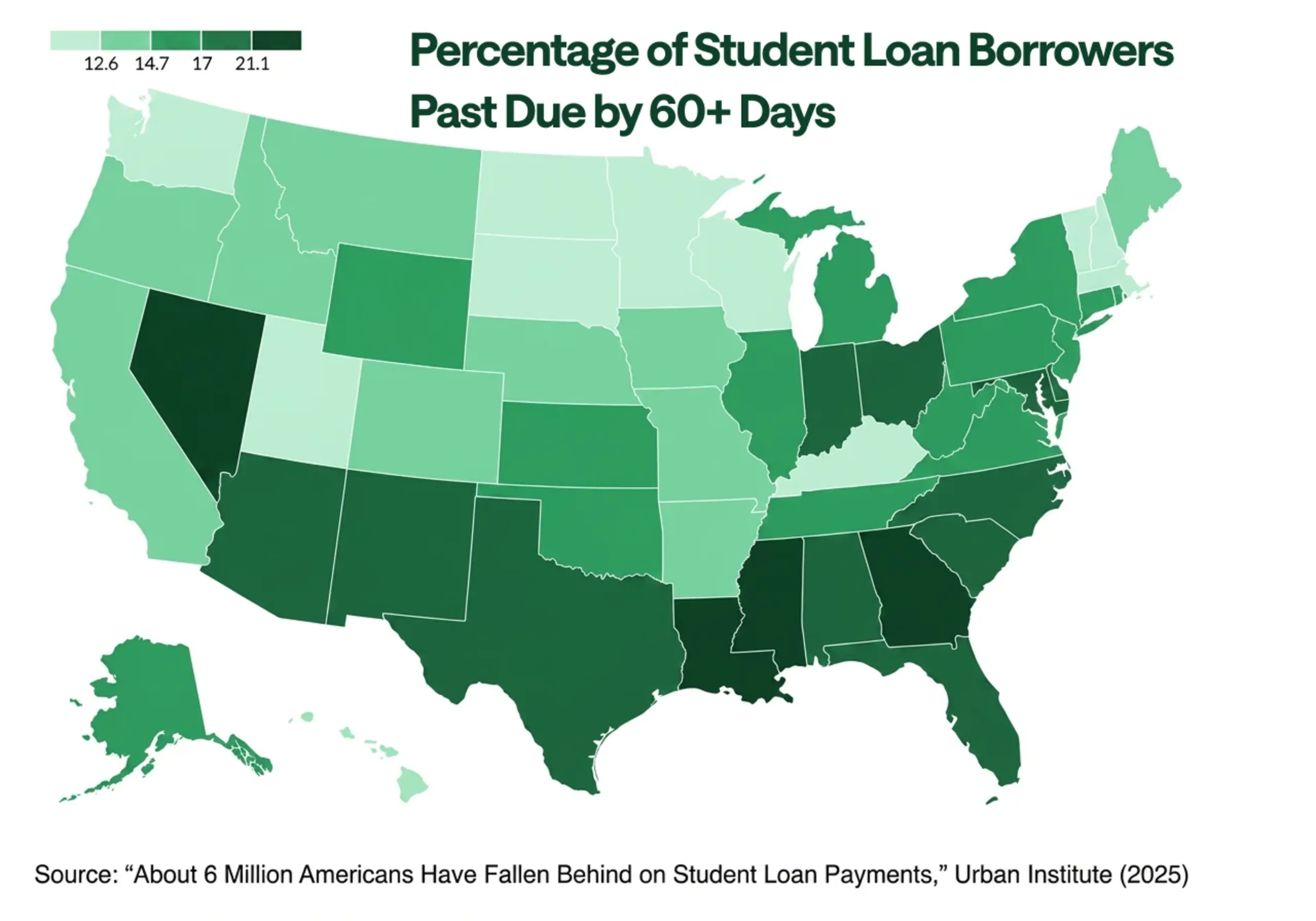
Source: “About 6 Million Americans Have Fallen Behind on Student Loan Payments,” Urban Institute (2025)
Workers Whose Rent Is Outpacing Income
The third cohort Aimee examined is a sizable one: renters. One third of households are renters, and an increasing share are finding it more difficult to save. (see disclosure 17) The 30% rule, used in federal housing assistance programs, says you should not spend more than 30% of your income on rent. Above that level, it’s a lot harder to save, especially if your income is below median.
The share of Americans spending more than 30% of their income on rent has doubled from 24% to 49%, according to a conservative estimate by Harvard University. (see disclosure 18) Using another measurement, Harvard said the share of working adults spending at least that much on rent is actually 65%. (see disclosure 18) And an alarming 1 in 4 renters spend more than half of their income on rent, making it incredibly difficult to save. (see disclosure 18)
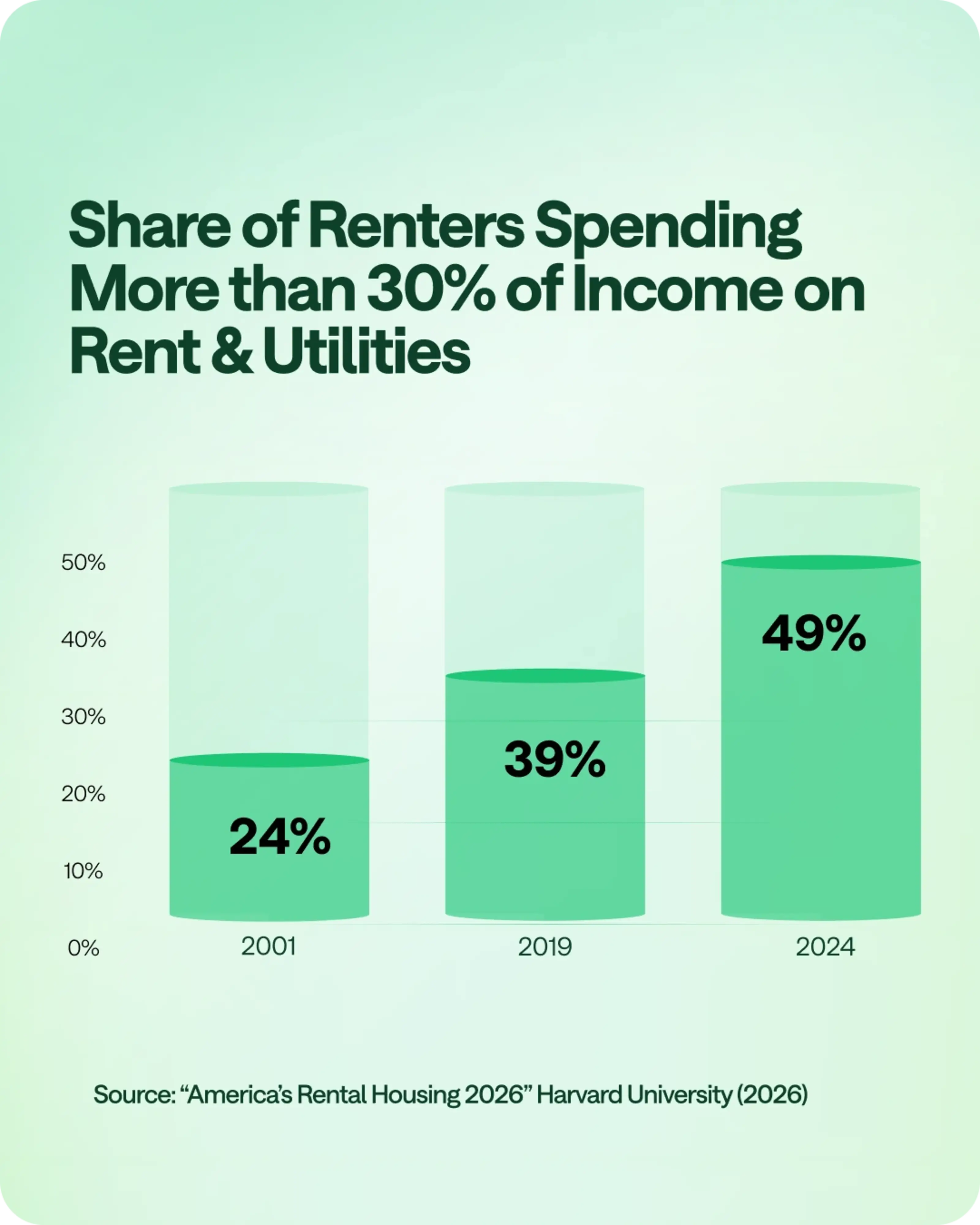
Source: “America’s Rental Housing 2026,” Harvard University (2026)
Workers with Rising Childcare Costs
There are 27 million Americans who rely on childcare so they can go to work. (see disclosure 19) Unfortunately, its cost has been rising about 1.7 times as much as that of overall inflation, which is high enough already. (see disclosure 20) In some places, childcare costs more than the average rent. (see disclosure 21)
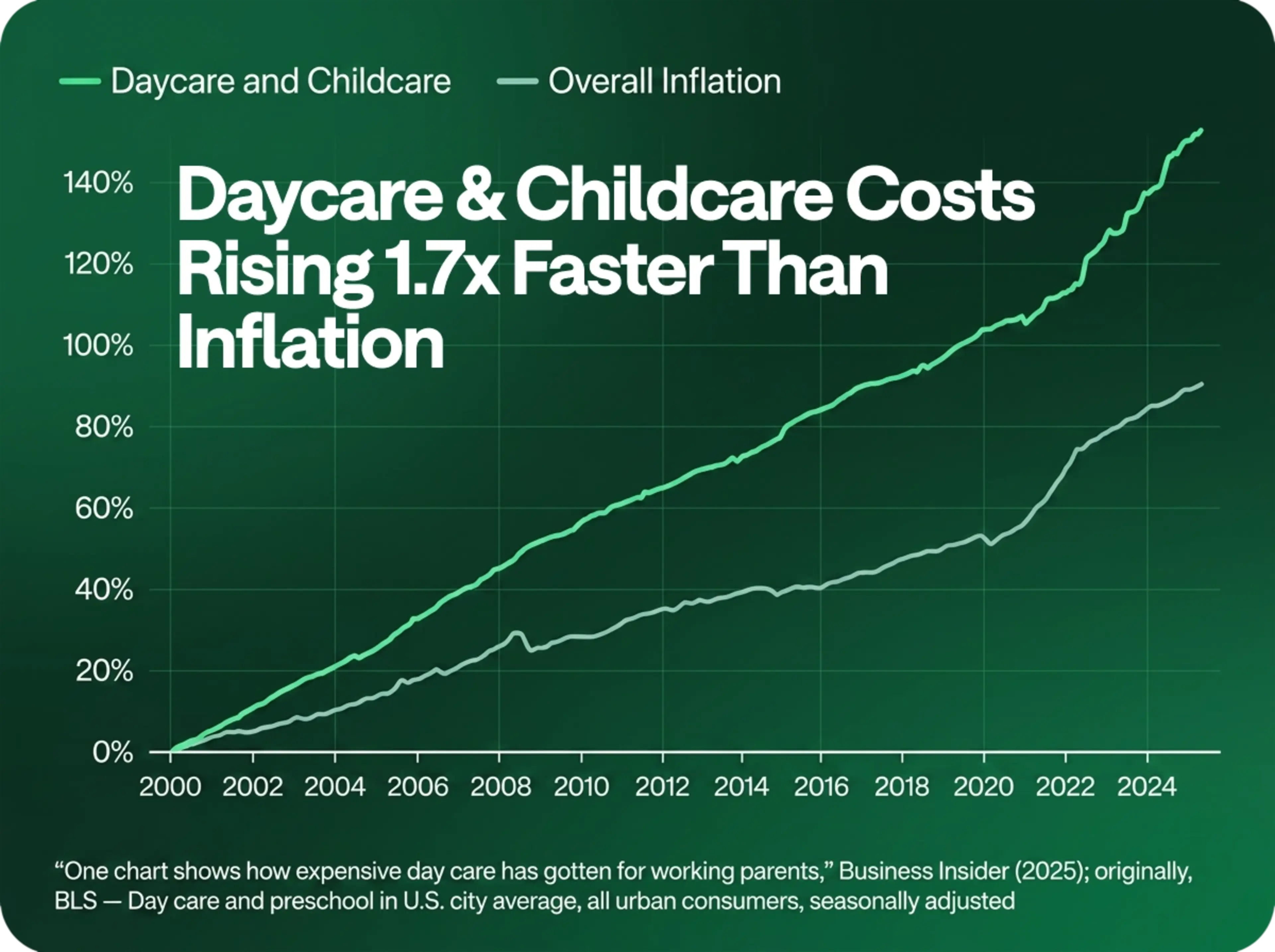
Source: “One chart shows how expensive day care has gotten for working parents,” Business Insider (2025); originally, BLS - Day care and preschool in U.S. city average, all urban consumers, seasonally adjusted
How Workers Without Savings Are Coping
Jeff then talked about how workers without savings typically respond to unexpected expenses:
They may simply not pay their bills. According to the Federal Reserve, 40% of student loan defaulters are behind on their credit card payments; 21% are late on their mortgage, and 57% are past due on auto payments. (see disclosure 22)
They can borrow. Depending on their credit profile, workers may be able to access a personal line of credit. 13% of eligible employees have a 401(k) loan outstanding. (see disclosure 23) Alarmingly, 1 out of 8 workers is asking a colleague or supervisor for a loan. (see disclosure 24)
They can turn to earned wage access, also known as EWA. The average worker runs out of funds 12 days after receiving a paycheck. (see disclosure 25) Employers first started offering EWA a decade ago to give workers a safer alternative to payday loans. But recently there have been major advancements in EWA’s technology, so that it can be offered as part of a holistic financial wellness platform, at no cost to either the employer or employee.
They may be motivated to begin saving. Growing savings for unexpected expenses is a top priority for employees. (see disclosure 26) In fact, they’ve ranked it as a top financial goal for 5 consecutive years. (see disclosure 26)
Modern EWA Should Help Workers Build Savings
Expanding on how those last two responses, EWA use and building savings, are connected, Jeff explained how legacy EWA programs often focus on easy liquidity instead of employee financial progress. These apps make their money, for the most part, when workers take instant transfers. The fees add up quickly and can reach $370 per year on average.
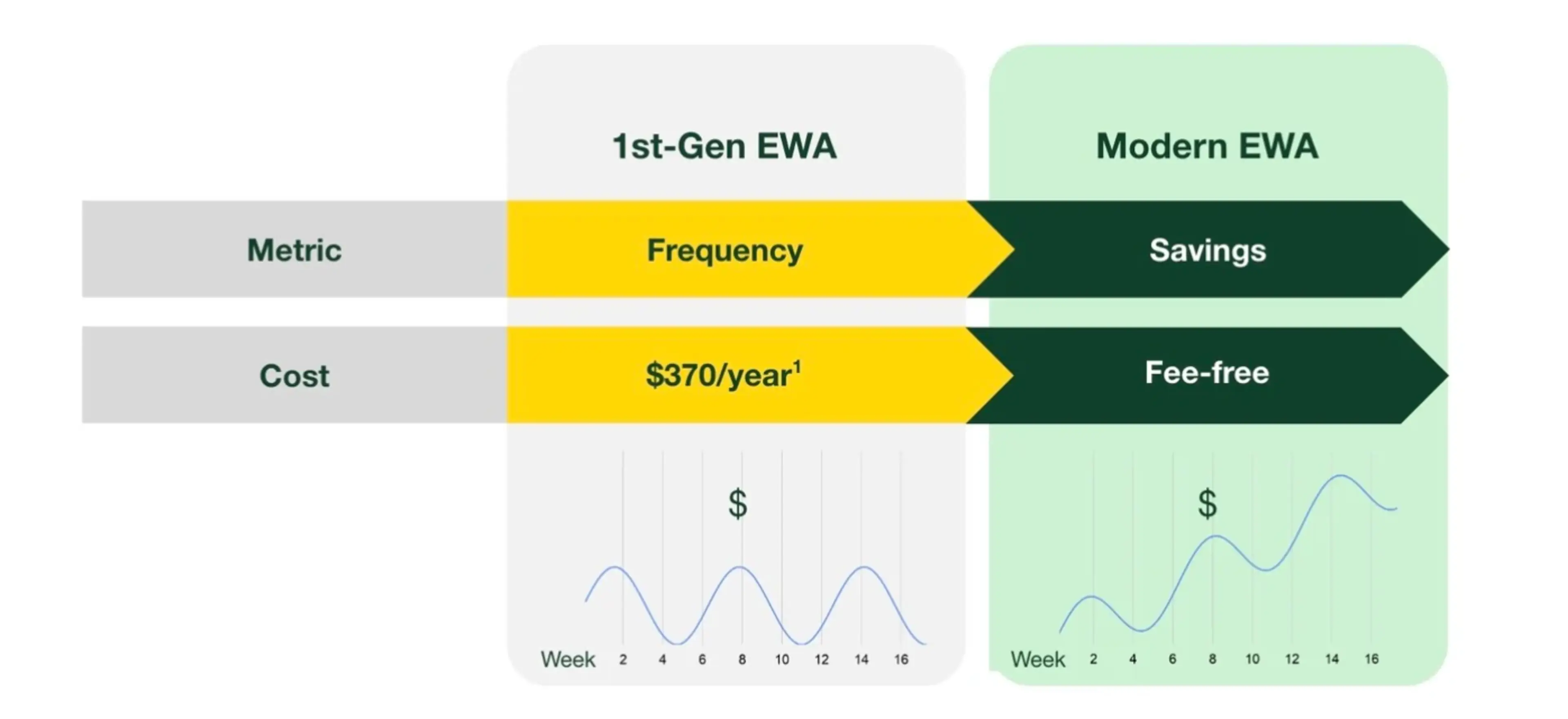
1. “Attorney general of the State of NY against DailyPay, Inc..” (2025).
Charts are for illustrative purposes only.
Modern EWA, he said, is different. It is embedded in a financial wellness platform with tools like high yield savings, credit building, financial education, budgeting and behavioral nudges. EWA then becomes the on-ramp for savings. Workers may enroll in the platform for early pay access. But then they can transition to saving, thanks to a combination of features such as incentives, built-in nudges, and personalized goal-setting.
That’s why success is measured not by how much workers use the EWA feature to access their pay earlier, but by whether (and to what degree) they are building savings. That’s the first meaningful step toward breaking the paycheck-to-paycheck cycle.
Workday Wellness Now Offers Chime Workplace to Power Employee Savings
With the webinar’s attention to employee savings and enabling overall workforce financial wellness, Aimee introduced Workday Wellness, an AI platform that connects and automates the entire benefits lifecycle, supporting everyone from HR teams and employees, to benefit providers and brokers. On the provider side, Workday Wellness has selected Chime Workplace as its first strategic financial wellness partner. Now, Workday clients can offer Chime Workplace fee-free (see disclosure 27) for employers and employees.
Why This Partnership
With today’s complexity of benefits, it can be difficult for HR leaders to fully optimize their offerings. It can also be tough for employees to use and find the right benefits when they need them. That’s where the power of Workday’s ecosystem comes in to expand reach, streamline implementations, and deliver personalized wellness experiences. Meanwhile, 97% of Chime members say Chime’s products have helped them with at least one aspect of financial progress. (see disclosure 28)
How Chime Workplace Works With Workday Wellness
Through this partnership, Chime Workplace comes pre-connected to the Workday platform through bi-directional APIs. Employers can browse the Workday Wellness marketplace, explore different providers, and add a solution like Chime Workplace. And instead of going through an integration build, adding a new benefit provider is as simple as downloading an app. Once the offering is live, employees can enroll and enter the Chime experience, an all-in-one financial health app that promotes financial progress in areas such as accessing pay, developing emergency savings (see disclosure 29) , and improving credit.
First Student, a Workday client and the largest student-transportation provider in the country, recently launched Chime Workplace and is already seeing positive results. 46% of active enrolled employees began saving within two months of launch. Of those employees, 76% continued building their savings (see disclosure 30) —an early indication of the kind of financial progress employers are looking for.
Interested in offering a financial wellness platform that promotes employee saving? Find out more about Chime Workplace integrated through Workday Wellness.