
Workplace financial wellness has moved beyond experimental. Today, many organizations view it as an important component of workforce support and engagement strategies.
Financial wellness programs commonly include features such as earned wage access, savings tools, and credit-building resources. When used responsibly and in accordance with program terms, these tools can help employees access educational resources and financial management options that support greater awareness and confidence.
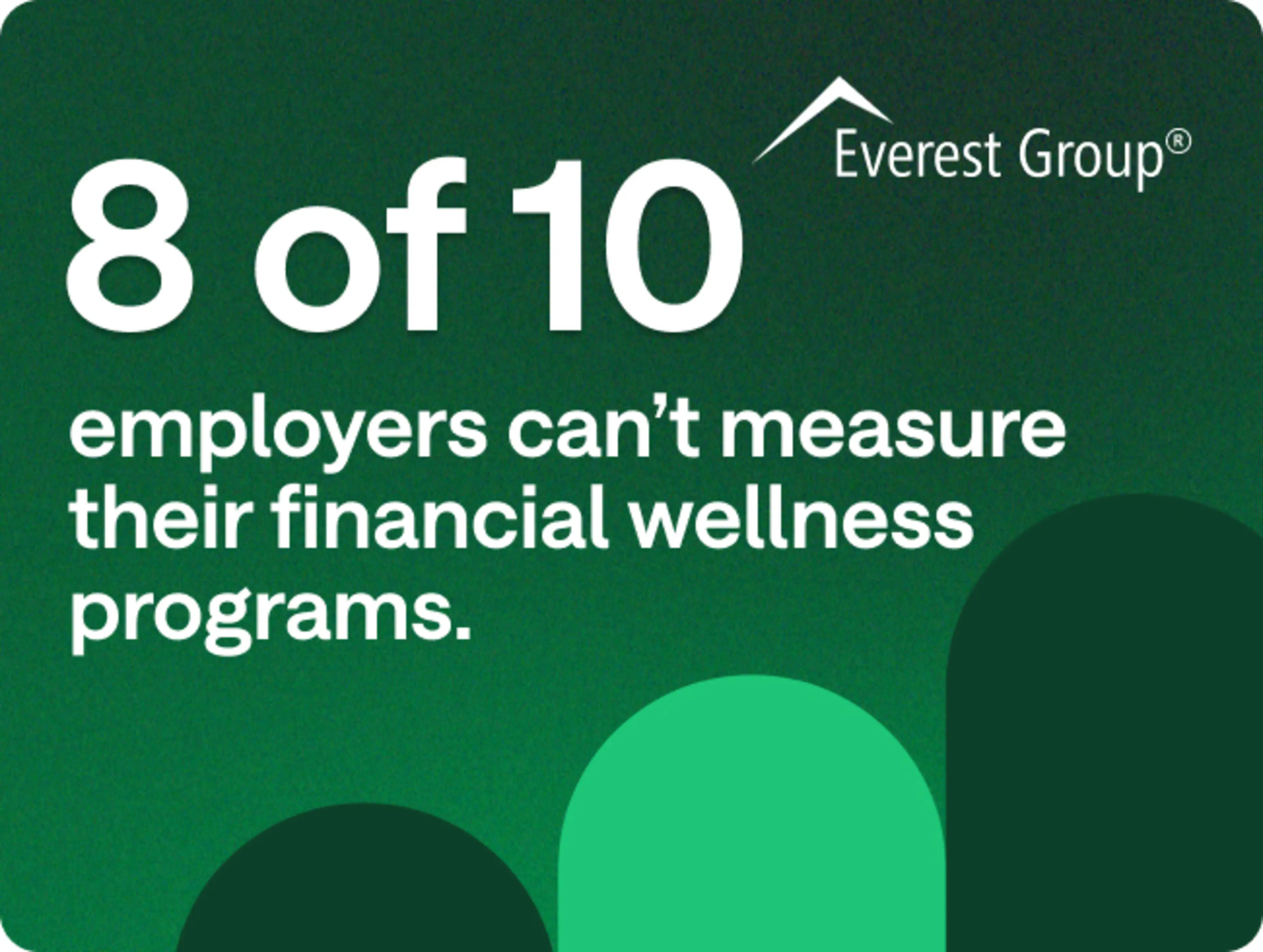
Recent research from Everest Group shows that 77% of employers cite financial wellness as their primary motivation for offering earned wage access. At the same time, nearly 8 in 10 employers report difficulty demonstrating measurable financial health outcomes from these programs.
While employee engagement with financial wellness tools is often visible, connecting that engagement to long-term, organization-wide outcomes remains a challenge.
Why Financial Wellness Is a Strategic Priority
Many employers now view financial wellness as an important part of broader workforce initiatives. According to Everest Group research approximately three-quarters of employers plan to prioritize financial wellness over the next twelve months. Employers often report that employees experiencing lower financial stress may demonstrate higher engagement and improved retention.
Workers without emergency savings are distracted by money problems for 8.2 hours per week, while at work. Financial stress leads to 34% more absenteeism. It also makes workers twice as likely to look for a different job. Financial stress may negatively affect workplace productivity .
The rationale for a financial wellness benefit is clear. The challenge begins when organizations try to quantify the return.
Why Measuring Financial Wellness ROI Is Hard
Measuring financial wellness outcomes differs from tracking traditional HR metrics. Payroll accuracy, benefits enrollment, and turnover rates can be verified through established systems. Financial stress and financial resilience, however, are more difficult to quantify.
Many financial wellness solutions primarily track participation metrics, such as enrollment rates or transaction volume. While these indicators show engagement, they do not always reflect changes in financial behaviors or financial health.
Earned wage access illustrates this challenge. When offered as a standalone tool, EWA may help employees address short-term cash flow needs, subject to responsible use and program terms. However, without additional financial tools and data context, it can be difficult to assess longer-term financial outcomes.
The Liquidity and Stability Consideration
Many financial wellness programs, especially those built around earned wage access, begin with liquidity because it is immediate, visible, and easy to implement. But liquidity alone does not create long term financial stability or stability.
Access to pay does not inherently build emergency savings. It does not automatically strengthen credit profiles. It does not ensure reduced dependence on high-cost borrowing over time. This is why earned wage access should be embedded in a broader employee financial wellness solution designed to build long-term financial resilience.
Comprehensive platforms may combine access-based tools with savings features, credit education, financial coaching, and analytics. Together, these components are designed to support responsible financial behaviors and provide employers with greater visibility into program utilization and trends.
What Employers Can Measure
To better understand financial wellness program effectiveness, many organizations are shifting from activity-based metrics to outcome-oriented indicators. These may include:
Savings trends - Growth in employee savings balances and participation in savings programs can provide insight into long-term financial planning behaviors.
Credit health indicators- Aggregate, anonymized credit data—where available and compliant—may reflect changes in responsible credit usage over time.
Financial stress signals - Some platforms incorporate employee surveys or engagement data to help organizations monitor changes in reported financial stress.
Goal achievement - When employees set and pursue personalized financial goals, progress toward those goals may offer additional context on program engagement.
Together, these data points can help employers assess how financial wellness initiatives align with broader workforce metrics.
Connecting Financial Wellness to Workforce Metrics
When integrated with HR and workforce analytics, financial wellness data may provide directional insights into organizational performance. For example:
Productivity indicators such as output consistency and manager feedback may help identify potential correlations with reduced financial distractions.
Attendance and punctuality trends can offer signals related to financial stability and reliability.
Retention patterns, particularly among hourly and frontline employees, may reflect how well financial wellness initiatives align with workforce needs.
These insights are most valuable when evaluated over time and alongside other organizational data sources.
What Helps Improve Measurement
Organizations seeking clearer ROI measurement often focus on building outcome-driven program frameworks. This may include:
Defining financial wellness KPIs at program launch
Establishing baseline engagement and stress indicators
Integrating financial data with HR systems
Reviewing trends over extended periods rather than isolated snapshots
In addition, pairing earned wage access with savings tools, credit education, and financial coaching can help create a more comprehensive support structure.
Analytics platforms that connect engagement data with workforce outcomes may also support more informed decision-making.
The Bottom Line
77% of employers prioritize financial wellness, many continue to face challenges demonstrating measurable outcomes. Moving from participation metrics to behavior- and trend-based analysis may help organizations better understand program effectiveness.
Financial wellness initiatives are most effective when they emphasize responsible use, education, and access to multiple financial tools. Over time, these approaches may help employers align financial engagement with broader workforce objectives.
Chime Workplace™ offers a comprehensive, holistic financial wellness suite designed to provide your employees with access to educational resources and various fee-free features, subject to applicable terms and eligibility, to help them progress along their financial wellness journeys. For more information, request a demo today.