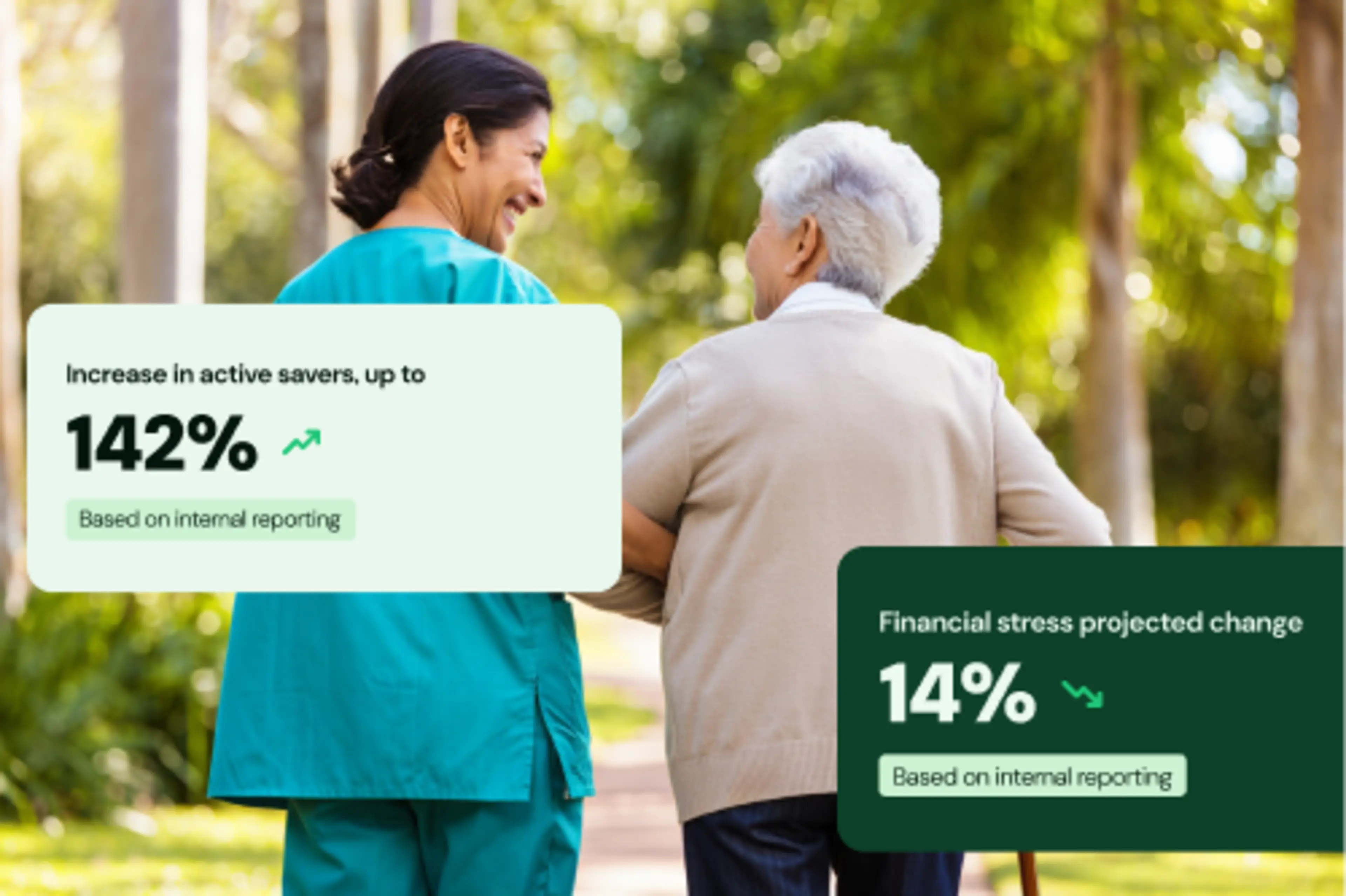

Investing in a financial wellness program can yield a significant return on investment. The Consumer Financial Protection Bureau (CFPB) stated that employers typically see a return of $3 for every $1 spent on financial wellness programs, in terms of reduced absenteeism and increased productivity.
Employers can calculate ROI by comparing the costs of implementing the program to the financial benefits resulting from improved employee performance and reduced turnover. This involves tracking the initial investment in the program, such as the cost of workshops, tools, and counseling services, and then comparing it to the savings from reduced absenteeism and increased productivity over a specific period.
Organizations that prioritize financial wellness programs differentiate themselves in a competitive labor market and improve employee satisfaction and workplace efficiency. By continuously evaluating and improving financial wellness initiatives, businesses can ensure long-term success for both employees and the organization as a whole.
Employer dashboards can be the starting point
Before calculating ROI, it’s critical to establish a clear baseline of employee financial health. Chime Workplace™ provides an employer dashboard that consolidates key workforce financial wellness indicators in one place. This includes metrics such as Earned Wage Access utilization, savings growth, credit improvement trends, and tool engagement, all presented in anonymized, aggregated views.
This centralized view not only simplifies tracking and reporting, but it also gives HR and payroll leaders a powerful starting point for understanding where their workforce stands today and where they need to focus their wellness strategy next. With these insights, companies can move from assumptions to actionable data, ensuring they measure not only output (ROI) but also progress toward true employee financial wellness.
ROI Formula for Financial Wellness Programs
ROI = (Financial Benefits - Program Costs) / Program Costs
Financial wellness programs provide measurable returns. Here’s how to calculate the ROI for an employee financial wellness program:
1. Identify Program Costs
Program cost & implementation expenses
Financial tools and resources
Counseling and advisory services
Administrative overhead
2. Measure Financial Benefits
Decrease in absenteeism costs
Productivity gains
Reduction in employee turnover expenses
3. Compute ROI
Subtract total costs from total financial benefits.
Divide the resulting number by the total program costs.
Evaluate results over a specific time period.
A good ROI for financial wellness programs typically ranges between 100% to 300% or higher, meaning for every dollar invested, a company sees a return of $1 to $3 or more. Specifically, an ROI of 200% or greater (equivalent to the cited $3 savings for every $1 spent) is considered very strong.
Programs achieving these ROI levels demonstrate excellent effectiveness in reducing absenteeism, improving productivity, and lowering turnover, key indicators of a successful financial wellness initiative.
To learn how Chime Workplace can support your employees’ financial wellness goals and result in significant ROI for your organization, schedule a no-obligation demo.