
For most employees, getting paid means a deposit lands in a checking account. But not every worker has a bank account, and employers want an alternative to paper checks. The employee debit card, more commonly called a payroll card, exists to fill that gap. It is a reloadable card onto which an employer loads wages each pay period, giving workers a way to receive and spend their pay without a traditional bank account.
For HR and benefits teams, payroll cards are worth understanding for two reasons. They solve an operational problem around paying the 25 million unbanked and underbanked households in the US, and they increasingly show up as one component of a broader employee financial wellness strategy. (see disclosure 1) This guide explains what payroll cards are, the types available, how they work, what they cost, and where they fit—and fall short—in supporting employees' financial health.
What Is a Payroll Card?
A payroll card is a prepaid card that an employer uses to pay wages electronically. Instead of issuing a paper check or sending a direct deposit to the employee's own bank account, the employer loads net pay onto the card each pay cycle. The employee can then use the card to make purchases, pay bills, and withdraw cash at ATMs, much like a standard debit card.
Payroll cards are most common in industries with high concentrations of hourly, seasonal, or frontline workers, including retail, food service, hospitality, and staffing. These workers often lack traditional checking accounts, triggering the need for an alternative solution like payroll cards.
How Do Payroll Cards Work?
The mechanics are straightforward. An employer partners with a payroll card provider, typically a bank or a program manager working with a bank. Employees who opt in receive a card linked to an individual account. On each payday, the employer transfers net wages to the account, and the funds become available on the card, usually on or before the normal pay date.
From there, the card behaves like any other reloadable prepaid debit card. Employees can:
Make purchases anywhere the card network (such as Visa or Mastercard) is accepted
Withdraw cash at ATMs, sometimes with surcharge-free access within a specific network
Pay bills online or set up recurring payments
Check balances and transaction history through an app, website, or phone line
Many programs also support additional features such as text or email alerts, the ability to transfer funds to another account, and in some cases a path to a more complete banking relationship. Wages are typically the primary funding source, though some cards allow the employee to load additional money.
Types of Payroll Cards
Not all payroll cards are the same. They vary by who issues them, how they are structured, and what they connect to. Understanding the main categories helps employers evaluate which model fits their workforce.
Network-branded versus closed-loop
Most payroll cards today are network-branded, carrying a Visa or Mastercard logo and usable wherever those networks are accepted. Closed-loop cards, which only work with a specific merchant or system, are rare in the payroll context because they limit where employees can spend their wages.
Standalone payroll cards versus banking-linked programs
A traditional standalone payroll card does one job: it holds and disburses wages. A growing alternative ties the card to a fuller set of financial tools, such as a spending account, a savings feature, early access to earned wages, or fee-free overdraft. These banking-linked programs blur the line between a payroll card and a full-featured account, and they are where payroll cards intersect most directly with financial wellness.
Employer-sponsored versus employee-chosen prepaid
An employer-sponsored payroll card is the program the employer offers. Separately, an employee always retains the right to direct their pay to a prepaid card or account of their own choosing. The distinction matters legally, because employees cannot be forced onto the employer's card.
Payroll Card vs. Direct Deposit and Paper Check
Direct deposit remains the most common way employees are paid, and for workers who already have a bank account, it is usually the simplest option. The case for payroll cards is strongest for employees who do not have, or do not want, a traditional checking account.
Compared with a paper check, a payroll card offers a few advantages for the unbanked: There is no need to open a bank account, funds arrive electronically rather than as a check that must be cashed (often for a fee), and pay is available immediately on payday. For employers, payroll cards reduce the cost and administrative burden of printing and distributing paper checks, and they cut down on issues like lost or uncashed checks.
Payroll cards can carry fees, and the employee's experience depends heavily on the specific program's terms.
The trade-offs are real, though. Direct deposit into an employee's own account is free and comes with the full protections and features of a bank relationship. Payroll cards can carry fees, and the employee's experience depends heavily on the specific program's terms. The right comparison is not payroll card versus direct deposit in the abstract, but payroll card versus whatever alternative a given employee would otherwise use, which for an unbanked worker may be check-cashing services that charge significant fees.
Payroll Card Fees
Fees are the most scrutinized aspect of payroll cards, and historically the most criticized. Depending on the program, employees may encounter charges for activities such as ATM withdrawals (especially out-of-network), balance inquiries, teller withdrawals, monthly maintenance, inactivity, or replacing a lost card.
Federal rules require transparency about these costs. Under the CFPB's prepaid account rules, payroll card providers must give employees clear disclosures of the fees that apply, including a short form covering key fees and a long form detailing all of them, before the employee chooses to be paid through the card.
For employers evaluating programs, the fee structure is the single most important factor. A card loaded with fees can quietly erode take-home pay; a well-designed program with minimal or no fees, surcharge-free ATM access, and free balance checks delivers most of the convenience of a bank account without the drawbacks. The trend has been toward fewer fees, partly in response to regulatory attention and partly as a competitive differentiator.
Payroll Card Pros and Cons
Weighing payroll cards means looking at them from both the employer's and the employee's perspective.
Potential advantages:
A practical pay option for unbanked and underbanked employees who lack direct deposit
Immediate access to wages on payday, with no check to cash
Reduced check-printing and distribution costs and administrative overhead for employers
Electronic security features, such as the ability to freeze or replace a lost card, that cash and paper checks lack
Federal consumer protections, including fee disclosure, error resolution rights, and limited liability for unauthorized transactions
Potential drawbacks:
Employee fees on some programs that can reduce the value of wages
On standalone cards, a more limited feature set than a full bank account
Possible confusion or friction for employees unfamiliar with how the card works
The bottom line: Payroll cards are as good as their terms. The specific design of each, not the category itself, determines the outcome.
Payroll Cards Laws and Regulations
Payroll cards are subject to oversight at both the federal and state level. At the federal level, the primary authority is the Electronic Fund Transfer Act and Regulation E.
Regulation E treats a payroll card account as a consumer account and is enforced by the Consumer Financial Protection Bureau (CFPB), which has supervisory and enforcement authority over both the financial institutions that issue payroll cards and, in many cases, the employers that offer them. The CFPB’s prepaid account rules layer on additional requirements specific to payroll cards, including the fee disclosures discussed earlier. Together, these federal rules set a baseline of consumer protections that applies nationwide: clear fee disclosure, access to account history, error resolution rights, and limited liability for unauthorized transactions.
States generally regulate how employers may pay wages, and many have enacted provisions addressing payroll cards specifically. Depending on the state, the rules may require written employee consent before pay can be loaded onto a card, guarantee at least one free withdrawal per pay period, mandate that employees receive an earnings statement, or restrict the fees that can be charged. Because these requirements differ from state to state and are enforced by state labor agencies, an employer operating across multiple jurisdictions has to satisfy both the federal rules and the specific wage-payment laws of each state in which it has workers.
One rule is non-negotiable: Employers cannot force employees onto a payroll card. The CFPB has stated that the Electronic Fund Transfer Act and Regulation E prohibit employers from mandating that employees receive wages exclusively on a payroll card of the employer's choosing. Employees must be offered at least one alternative, such as direct deposit to their own account or a paper check, and be allowed to choose.
Payroll Cards and Employee Financial Wellness
A payroll card, on its own, is a payment mechanism, not a financial wellness benefit. But the better versions of these programs are increasingly built as an on-ramp to broader financial tools, and that is where they connect to true employee financial wellness benefits. The value, in this regard, depends entirely on what the card is attached to.
A payroll card embedded in a fuller program can give workers real tools to manage cash flow and build a cushion.
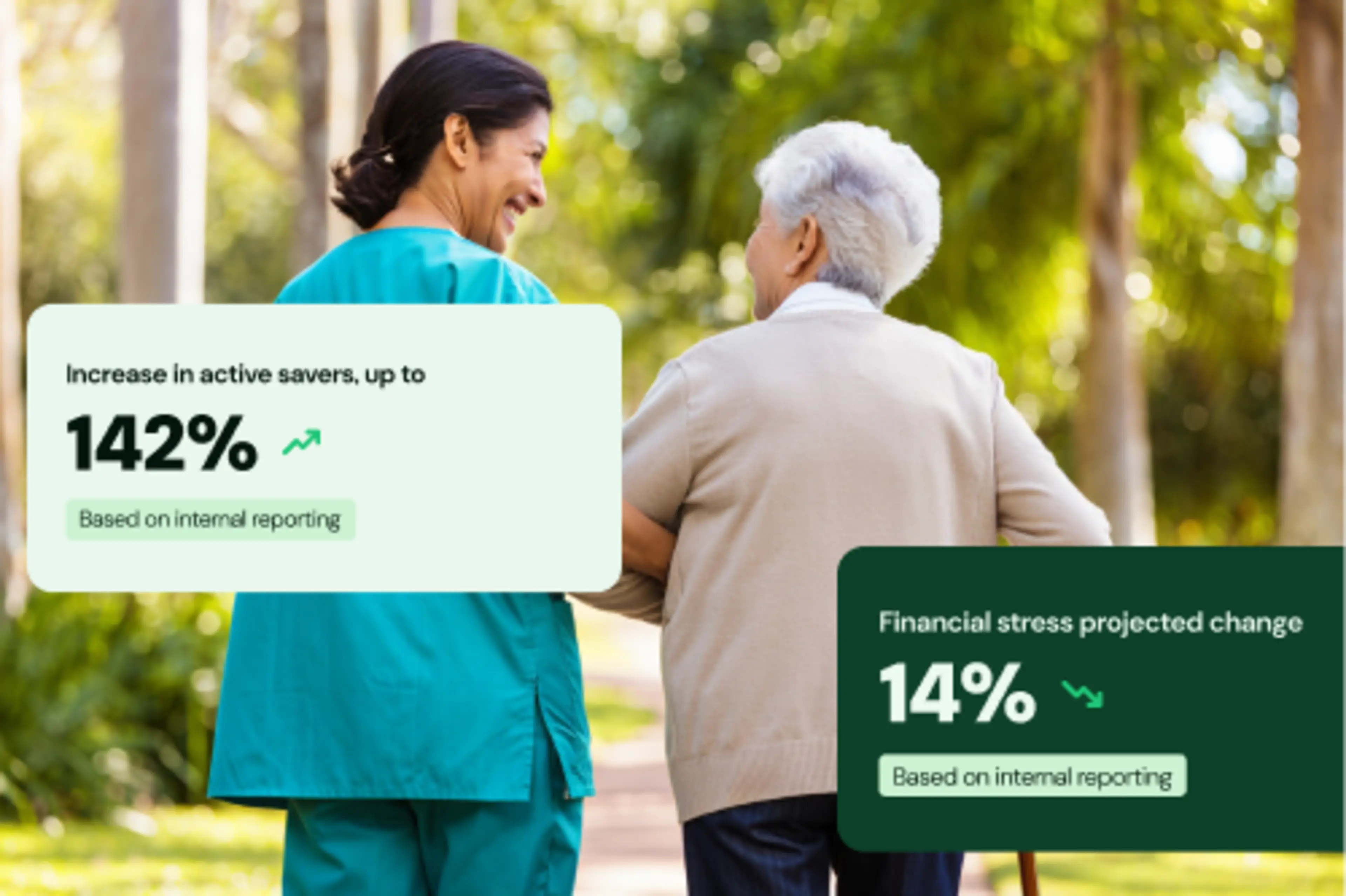
A bare payroll card that simply disburses wages does little to improve an employee's financial health; at worst, a fee-heavy one can make things harder. A payroll card embedded in a fuller program is a different proposition. When the card connects to features such as a no-fee spending account, automatic savings, early access to earned wages, and overdraft protection without fees, it can give workers, especially those previously locked out of mainstream banking, real tools to manage cash flow, avoid high-cost alternatives like payday lenders and check cashers, and build a cushion.
Earned wage access, also known as EWA, lets employees draw a portion of the wages they have already earned before the scheduled payday. As a feature of a financial wellness platform, it directly addresses the cash-flow gap that pushes many workers toward overdraft, late fees, or payday loans when an expense lands between paychecks. Paired with a payroll card, EWA turns the card from a simple disbursement tool into a way for employees to access money when they actually need it. It’s the kind of capability that separates a payroll card paired with a broader financial wellness platform from a standalone card that only moves wages once per cycle.
Workplace Banking: An Alternative to Payroll Cards
Payroll cards are often viewed as a stopgap solution. Employers looking to offer a more comprehensive solution can consider a no-cost employee banking benefit. Employee banking was initially local and relationship-driven, with nearby credit unions offering employees access to basic banking services. Times have changed. Modern workforces, especially when distributed and mobile, often prefer a digital experience.
A modern workplace banking benefit has emerged that:
Reaches every employee, regardless of location
Offers a full suite of banking tools
Onboards employees in minutes
Integrates with payroll, enabling EWA and split-savings
Delivers a delightful user experience for employees
Tracks workforce savings rates, credit health, and financial wellness ROI for employers
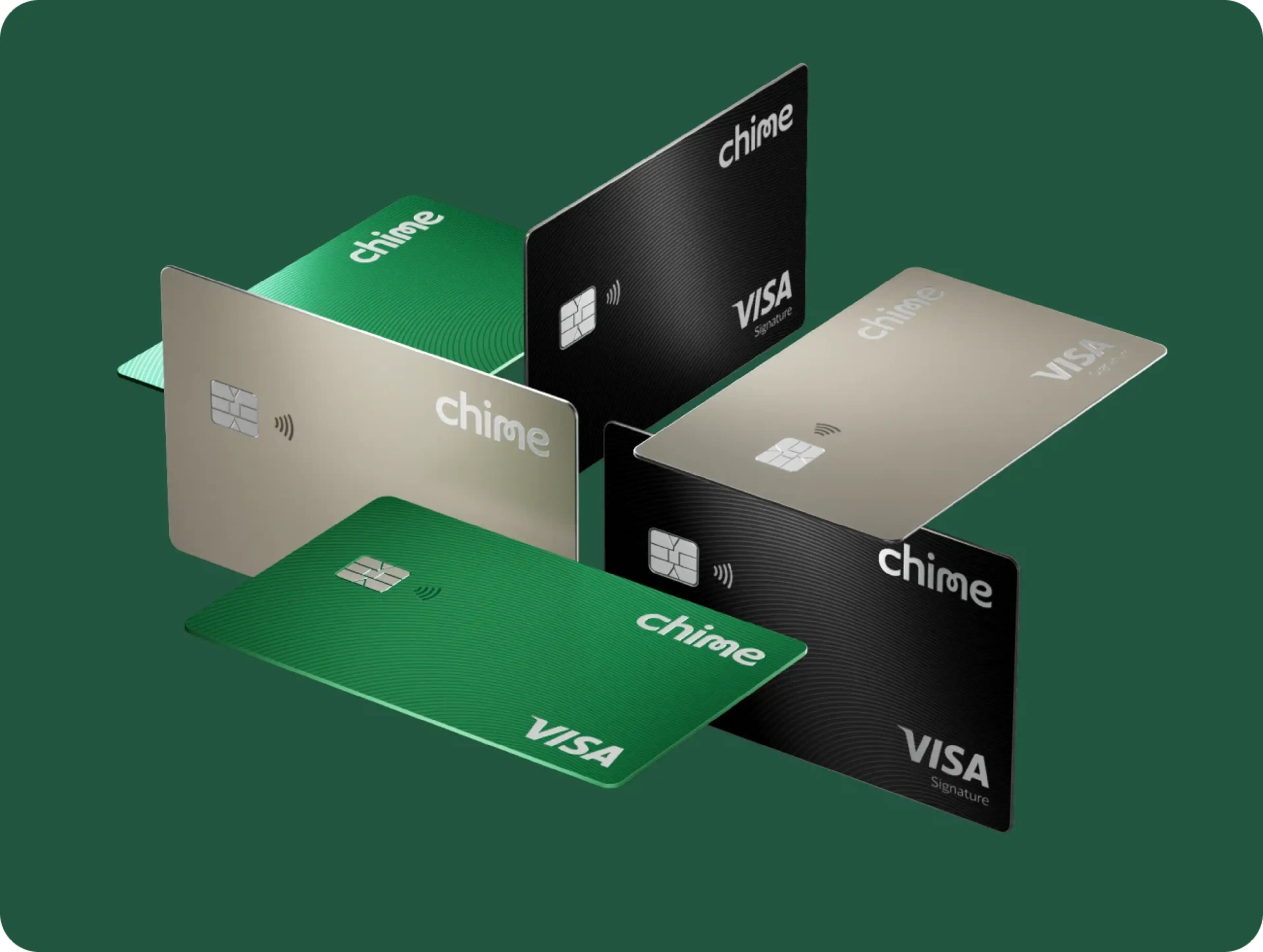
Chime WorkplaceTM is built on that idea. When an employer offers Chime Workplace as its financial wellness solution, pay is sent directly to the employee’s card. But it is also a fee-free (see disclosure 2) everyday card carrying a full financial wellness toolset: early direct deposit (see disclosure 3) , fee-free EWA (see disclosure 4) and overdraft (see disclosure 5) , high yield savings (see disclosure 6) , credit building (see disclosure 7) , financial education, and more.
The same card paying every worker is the one delivering the tools that define financial wellness.
The significance for employers is that the same card solving the operational problem of paying every worker is the one delivering the savings, credit building, and cash-flow tools that define financial wellness. There is no separate program to manage, and no trade-off between a card that is convenient to administer and one that employees actually want in their wallet.
If you’re ready to build a financial wellness program on a strong foundation, schedule a call to learn how Chime works for your workforce.
This guide is for informational purposes only. Chime does not provide financial, legal, or tax advice.