
Key takeaways from our Dallas Executive Roundtable, March 30, 2026
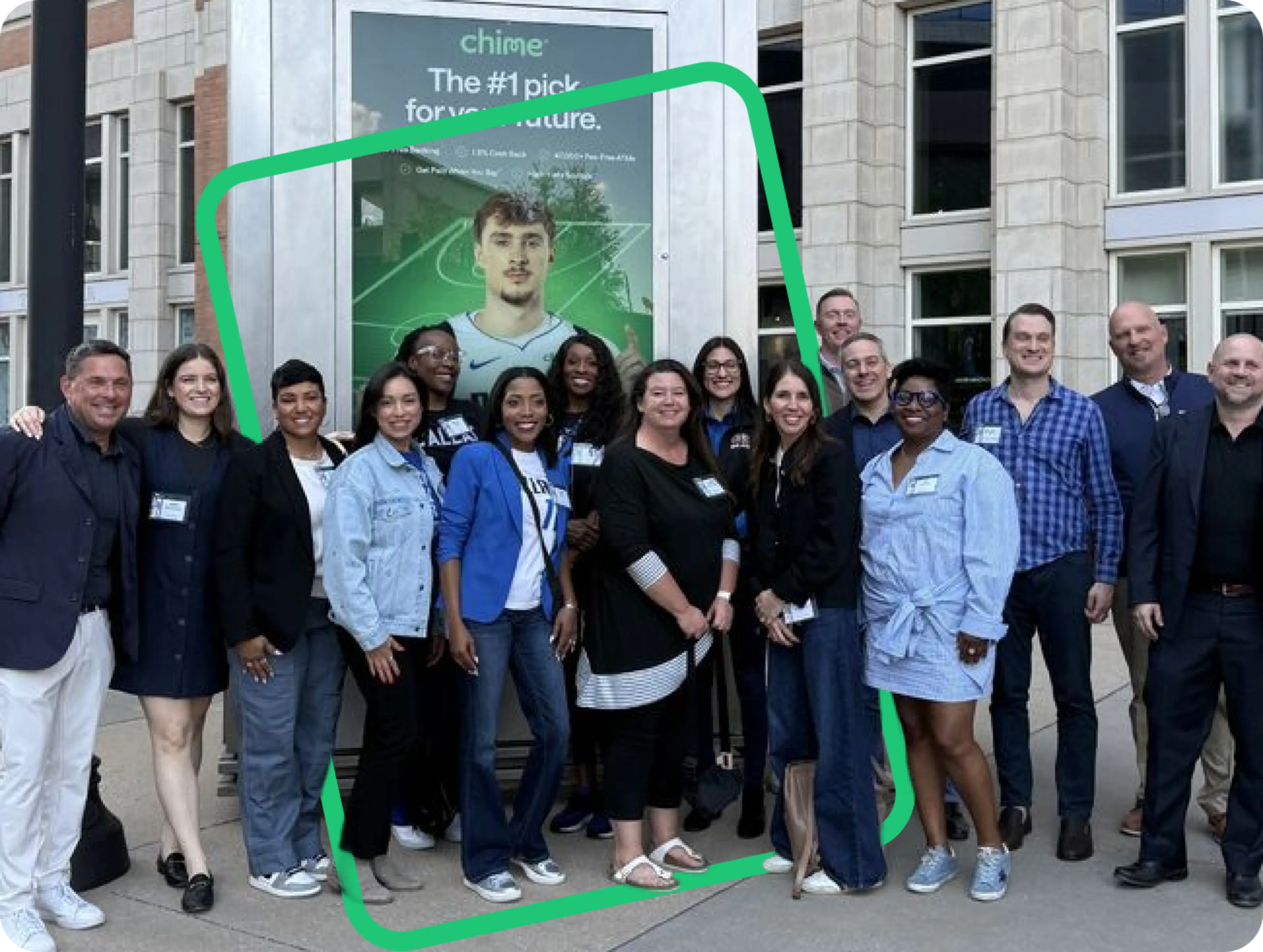
We recently brought together a group of senior HR and operations leaders in Dallas for a candid executive roundtable discussion, followed by an evening at the Mavericks game.
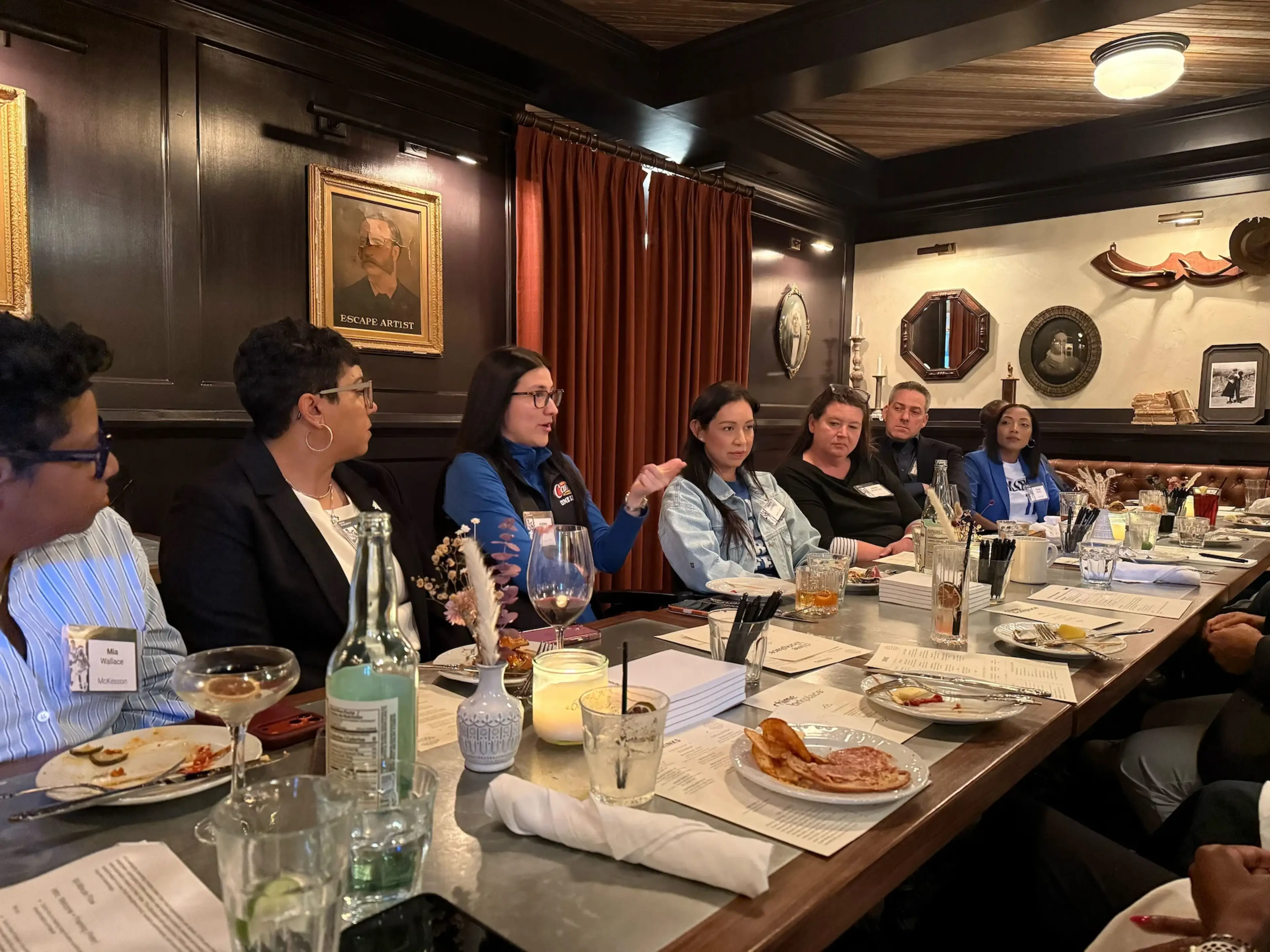
Around the table were formidable leaders local to the Dallas area, including the director of HR supply chain at Dick’s Sporting Goods, the corporate HR director for Tenet Health, VP of talent at NFI Industries, SVP of total rewards at Raising Cane’s, and the head of global payroll at McKesson, among others. Each is navigating the same challenge in different ways: how to lead through AI disruption, while running complex, frontline-heavy businesses.
The conversation, led by Peter Czimback, Advisor to the CFO of Palantir, and myself, quickly surfaced a clear tension at the center of it all:
The urgency to move fast on AI at the top… and the uncertainty felt by employees on the frontlines.
Because while leadership is being pushed to define an AI strategy, frontline teams are still asking a more fundamental question: What does this actually mean for me?
Here are the key themes that stood out.
1. “Incorporating AI” into the org is a top-down mandate
Across the room, one thing was consistent: every leader is being asked, “What are you doing with AI?”
Leaders are experimenting with tools like ChatGPT and Copilot for everyday workflows.
Organizations are formalizing AI into vendor requirements and roadmaps.
There’s real pressure from leadership to show progress, quickly!
The takeaway: Urgency is high, but clarity is still forming. AI adoption is no longer optional. But speed without direction creates risk.
2. The biggest mistake: solving small problems instead of the right ones
One of the clearest patterns discussed: organizations are busy experimenting with AI but not always focused on the problems that matter most and it can be distracting.
Leaders shared that:
Teams are solving small, disconnected use cases.
Efforts are fragmented across the business.
Innovation is happening without alignment to core business outcomes.
This creates a familiar dynamic: activity without impact.
What’s changing is a shift toward sharper questions:
What business problem are we actually solving?
Is it tied to growth, cost, or workforce performance?
The takeaway: AI isn’t the strategy. Solving the right problem is.
3. Process before technology. Every time!
A recurring theme throughout the conversation:
You can’t automate your way out of a broken process.
Leaders emphasized:
Start with the workflow.
Identify inefficiencies and decision points.
Then layer in automation or AI.
Otherwise, you’re just accelerating failure.
The takeaway: Transformation starts with redesigning how work happens.
4. AI isn’t taking frontline jobs, but it’s reshaping work
Despite the headlines, most leaders rejected the idea that AI is fundamentally about job loss.
Instead, the conversation reframed the issue: AI shifts what work people do, not whether they’re needed.
AI changes how work gets done.
It increases the value of adaptable, skilled employees.
The real risk is falling behind, not being replaced.
But there was also realism:
In some transactional areas, roles are being reduced.
The bigger opportunity is redeployment and upskilling.
The takeaway: The workforce isn’t shrinking, it’s being reshaped and is evolving quickly.
5. The real barrier to AI success is worker readiness
While AI is being driven top-down, success is determined bottom-up.
Leaders highlighted a consistent disconnect:
Leadership is focused on tools and transformation.
Frontline employees are navigating day-to-day realities, often under stress and unsure of the future.
And one theme surfaced repeatedly:
Employee readiness—not technology—is the gating factor for transformation success.
That readiness isn’t just about skills or training. It’s about whether employees:
Trust the change
Understand how it helps them
Have the capacity—mentally and financially—to adopt it
And this is where a critical, often overlooked factor came into focus:
Financial stress
For many frontline workers, financial instability is a daily reality:
Living paycheck to paycheck
Managing unexpected expenses
Navigating inconsistent hours or income
Leaders connected this directly to business outcomes:
Call-outs
Turnover
Lower productivity
Reduced engagement
Which raises a bigger question:
How can employees adopt new tools and ways of working if they’re already under financial stress?
This is where the conversation expanded beyond traditional “employee experience.”
At Chime Workplace, we see this as a critical unlock.
Forward-thinking organizations are starting to recognize that:
Financial well-being is not separate from performance, it drives it.
Reducing financial stress improves focus, stability, and retention.
Supporting employees’ financial lives is foundational to enabling any transformation.
Because when employees feel stable, they’re more open to change.
The takeaway: If your workforce isn’t ready, your AI strategy won’t land—no matter how good the technology is.

6. Employee adoption of AI is a change management issue
Even with the right tools in place, AI adoption is at risk if it is not rolled out properly.
Common barriers:
Fear of job loss
Lack of clarity on what AI is and how it can help
Resistance to changing workflows
What’s working:
Starting with leaders first
Showing practical, everyday use cases
Framing AI in terms of “what’s in it for me”
Creating space to experiment
The takeaway: Adoption of new tools will fail if employees aren’t set up to succeed and don’t see the value to them.
7. Simplicity wins
In a conversation full of complexity, one principle stood out:
If it’s not simple, it won’t scale.
The most effective approaches:
Focus on fewer, higher-impact problems
Simplify workflows before layering technology
Make solutions intuitive for employees
The takeaway: The winners in the AI race won't necessarily be the most technologically advanced, they’ll be the most focused on solving the right problems in a simple way.
Final thought
The most grounded insight from the session wasn’t about AI at all. It was how organizations that get this right start with the business problems they need to solve, and then design around the realities of their frontline workforce.
That means removing the barriers—operational and personal—that prevent employees from performing at their best.
So the real question isn’t: “What’s our AI strategy?”
It’s: “Are our people ready for what’s coming—and what’s getting in their way?”
And increasingly, one of the biggest barriers inside the workplace is financial stress.
When employees are worried about making it to the next paycheck, adopting new tools and ways of working isn’t realistic.
But when you reduce that friction and give people more stability and control over their financial lives, you unlock something much bigger. A workforce that’s not just more productive, but actually ready to adapt, grow, and perform.
Learn More
Chime Workplace™ helps organizations support employees’ financial well-being with tools and resources designed to reduce stress and build stability—so teams are more focused and ready to embrace change. Because when your workforce is financially secure, transformation initiatives like AI are far more likely to succeed. To learn more about how Chime Workplace supports employers and their teams, request a demo.