
As Earned Wage Access (EWA) continues to evolve as a component of workplace benefits programs, employers are taking a more structured approach to evaluating how these tools fit within broader financial wellness strategies.
During Chime Enterprise’s recent webinar on EWA and financial wellness, HR, benefits, and payroll leaders shared questions about cost models, compliance considerations, employee adoption, operational integration, and long-term program value.
Below, we address the most frequently raised questions from the session, along with resources to support your evaluation process.
Why Is Earned Wage Access Becoming More Common?
A recurring question from attendees was:
“Why are more employers exploring EWA now?”
Employee expectations around pay access and financial tools continue to evolve. Many organizations now evaluate EWA alongside core benefits rather than as a standalone offering.
Today’s workforce increasingly values:
Timely access to earned wages
Tools designed to support everyday financial management
Benefits aligned with real-life financial needs
Recent research from Everest Group suggests that employers are viewing EWA as one element of a broader financial wellness ecosystem rather than an isolated perk.
When thoughtfully implemented, EWA programs are designed to:
Support financial awareness
Be evaluated alongside broader engagement and workforce experience initiatives
Streamline certain pay-related processes, depending on integration
Reduce administrative friction
Align with workforce stability initiatives
As a result, many employers now assess EWA as part of baseline benefits infrastructure rather than an optional add-on.
Should Earned Wage Access Be Offered at No Cost to Employees?
One of the most common questions was:
“Does EWA need to be paid for by employees?”
Historically, many first-generation EWA programs relied on transaction fees as their primary revenue source. These fees were typically paid by employees, even when “free” options were technically available.
Today, technology and business models have evolved. Many employers now prefer EWA solutions that are offered without required transaction fees for standard access subject to applicable terms and eligibility, when embedded within broader financial wellness platforms.
Fee-based approaches may, depending on structure:
Influence participation levels
Affect employee perception of value
As a result, organizations are increasingly evaluating employer-sponsored, fee-free models that align with equity and engagement goals.
To compare different pricing and program structures, review the EWA Buyer’s Guide & Checklist.
Why Has Employee Interest in EWA Shifted in Recent Years?
Some participants noted changing survey results and asked:
“Why does EWA seem less popular than it was before?”
Many employees are navigating a challenging financial environment, shaped by rising living costs, healthcare expenses, and economic uncertainty. In this context, workers often seek a range of financial tools, not only early wage access.
In addition, employees now have more liquidity options available outside traditional EWA programs. Standalone offerings, particularly those with fees or limited integration with broader financial wellness tools, may feel less compelling.
As expectations shift, many employees are looking for solutions that support longer-term financial management in addition to short-term cash flow needs.
Are Employers Seeing Workers Build Savings Through EWA Programs?
Another key question was:
“Are there examples of employees moving beyond wage access to building savings?”
Some employers have reported that when EWA is paired with integrated savings and financial tools, employees may engage more consistently with long-term financial behaviors.
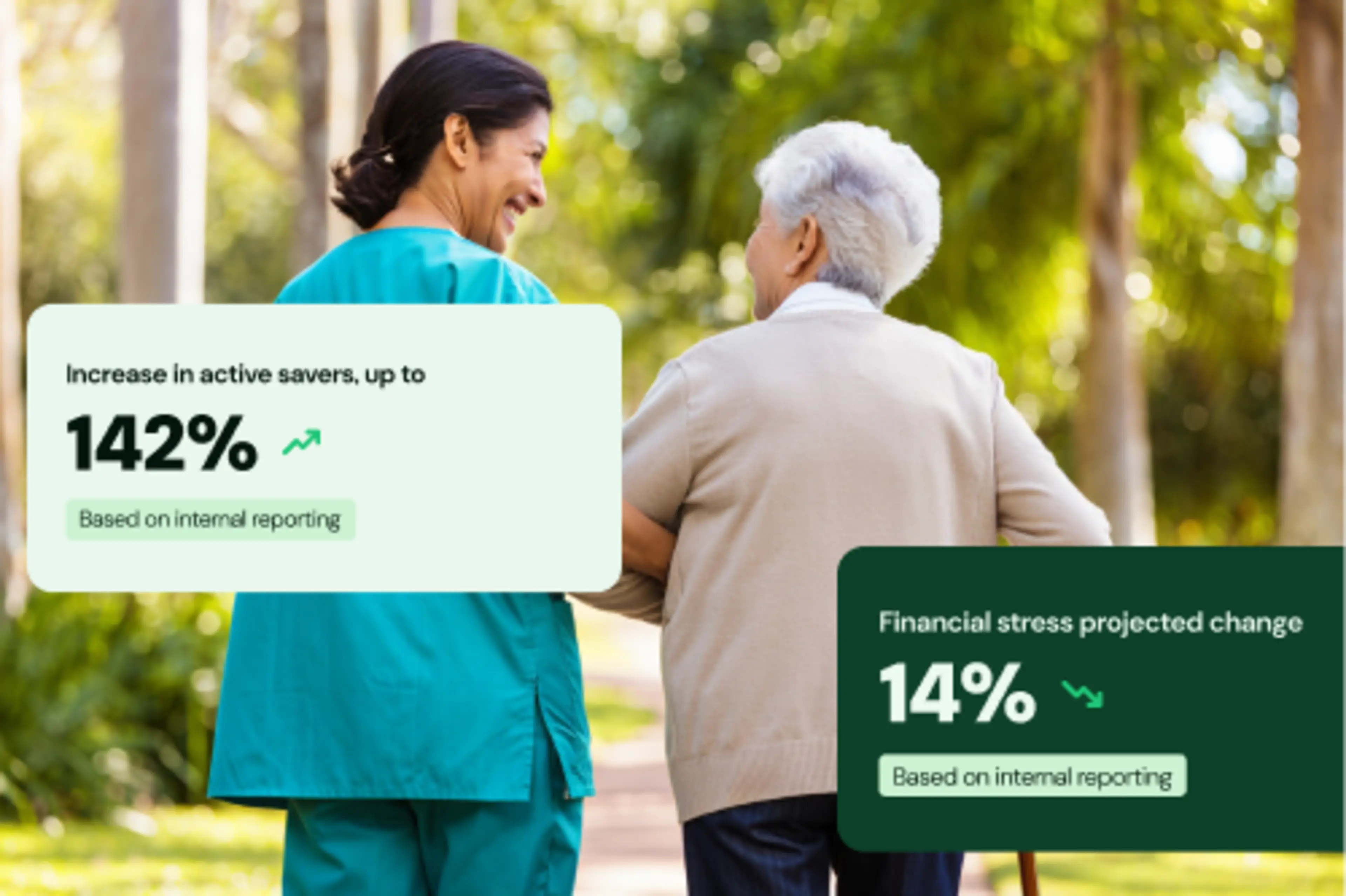
In one recent case study discussed during the webinar, a large employer transitioned from a standalone EWA solution to a broader financial wellness platform. The organization reported increased participation in savings features following platform integration. Reported outcomes were specific to that employer’s experience and may vary.
While individual outcomes vary based on usage and circumstances, these examples illustrate how integrated platforms may be structured to support both short-term liquidity and longer-term financial planning tools, depending on employee usage.
What Is the Most Common Mistake When Selecting an EWA Partner?
Participants frequently asked:
“What do employers get wrong when choosing an EWA provider?”
A recurring theme from the discussion was that many organizations treat EWA as a standalone point solution rather than part of a broader financial wellness strategy.
Recent research from Everest Group indicates that while many employers adopt EWA to support financial wellness strategies, some report difficulty demonstrating measurable workforce-level outcomes.
As the market matures, employers are increasingly prioritizing:
Program structures that do not require transaction fees for standard access, subject to terms
Compliance-focused design
Integrated savings and education tools
Enterprise-level reporting capabilities
These factors reinforce the importance of evaluating EWA as part of a cohesive platform rather than a single-function product.
Where Should Employers Start When Reassessing an EWA Program?
Another common question was:
“If we’re re-evaluating our current program, where do we begin?”
Speakers recommended starting with a strategic reset focused on measurable impact.
Many employers are reassessing programs across five essential areas:
Cost – Is access truly zero-fee for employees, subject to terms?
Compliance – Is the model designed to reduce regulatory and payroll risk?
Reliability – Does it integrate at enterprise scale?
Financial Progress – Are there indicators of longer-term engagement, such as savings trends?
Service & Support – Does the provider reduce administrative burden?
This approach helps organizations determine whether their current solution aligns with evolving market expectations.
How Do Minimal Fees Compare to Other Financial Alternatives?
Some attendees raised a practical question:
“Isn’t a small EWA fee better than payday loans or late fees?”
Speakers acknowledged that employers often evaluate EWA alongside other short-term liquidity options. Cost structures, timing, and regulatory treatment vary across financial products.
When EWA is embedded within broader platforms that generate revenue from other sources, it may be possible to offer access without transaction fees, subject to program terms.
This shift simplifies administration and aligns with many employers’ goals to reduce employee financial friction.
How Can Employers Measure Financial Progress Responsibly?
Another important question was:
“How do we know whether employees are actually improving financially?”
Employers typically should not access individual financial data. Instead, many organizations now expect providers to offer privacy-safe, aggregated reporting.
These reports may include workforce-level indicators such as:
Participation in savings tools
Changes in utilization patterns over time
Workforce-level engagement trends
If a provider can only report utilization, employers may be measuring access rather than broader engagement.
At the same time, personal financial responsibility remains important. While employers cannot control individual behavior, benefit design can encourage positive habits through education, defaults, and supportive tools.
Does EWA Add Payroll Complexity?
Some leaders asked:
“Will EWA complicate payroll operations?”
Modern EWA platforms are typically designed to integrate with existing payroll environments.
Leading solutions may:
Sync with payroll systems
Support automated reconciliation
Maintain wage record alignment
Be designed to reduce manual processing, depending on employer configuration
When implemented properly, these systems are intended to operate alongside payroll workflows rather than disrupt them.
How Does EWA Fit Into a Financial Wellness Strategy?
A frequent question was:
“Is EWA enough on its own?”
EWA is most commonly evaluated as part of a broader financial wellness framework that may include:
Savings tools
Credit education resources
Budgeting support
Financial literacy content
Mobile-first access
Combined, these tools are intended to provide employees with access to short-term liquidity options and longer-term financial education resources based on individual usage and circumstances.
Chime Workplace™’s approach reflects this shift toward integrated systems rather than standalone access tools.
What Does Implementation Typically Involve?
Attendees also asked:
“How long does implementation take?”
While timelines vary by organization, most enterprise deployments include three phases:
1. Discovery & Integration: Align HRIS, payroll, and data systems
2. Configuration & Testing: Validate workflows and compliance controls
3. Employee Launch & Education: Support adoption through structured communication
With appropriate planning, implementation timelines may vary, depending on organizational complexity, integration requirements, and internal readiness.
What’s Next for Earned Wage Access?
Looking ahead, EWA continues to evolve alongside regulatory, technological, and workforce trends.
Key areas of development include:
Expanded financial wellness integration
Increased employer sponsorship
Ongoing regulatory developments, which may vary by jurisdiction
Greater personalization
Data-driven financial insights
Organizations that prioritize scalable, compliance-forward platforms can be better positioned to adapt to future workforce expectations.
About Chime Workplace™
Chime Workplace offers a comprehensive, holistic financial wellness suite that provides employees with access to education and various fee-free features to help them progress along their financial wellness journeys. For more information, request a demo today.