
Senior Living Communities’ innovative approach to employee financial wellness evolved beyond traditional earned wage access (EWA).
After cycling through multiple EWA and financial wellness providers over several years, the senior living organization made a strategic decision to replace its existing solution with Chime Workplace™. The result: a program designed to reduce employee-paid fees, streamline payroll processes, and provide visibility into employee financial wellness indicators.
Read more on Employee Benefits News: "Beyond EWA: How a senior living company helped employee savings skyrocket." |
Overview
Industry: Senior Living
Employees: ~3,500
Based in: Charlotte, North Carolina, with communities in Connecticut, Florida, Georgia, Indiana, New Jersey, North Carolina, and South Carolina.
Payroll System: UKG
Time to Launch: ~2 weeks
EWA provider switch results at a glance
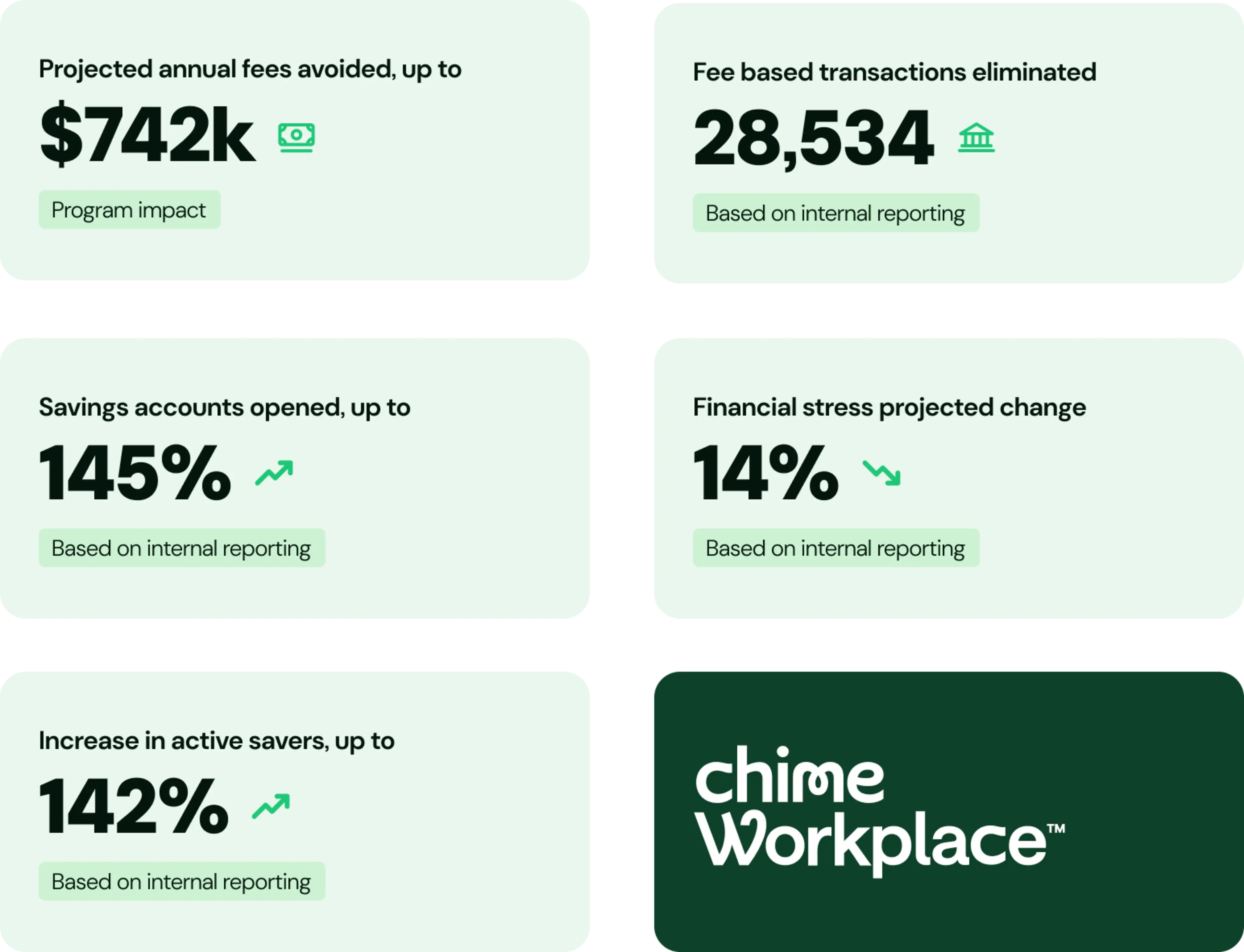
Up to $742K projected annual employee fees avoided based on program assumptions1
Increase in employee savings account opening (up to 145% based on internal reporting)
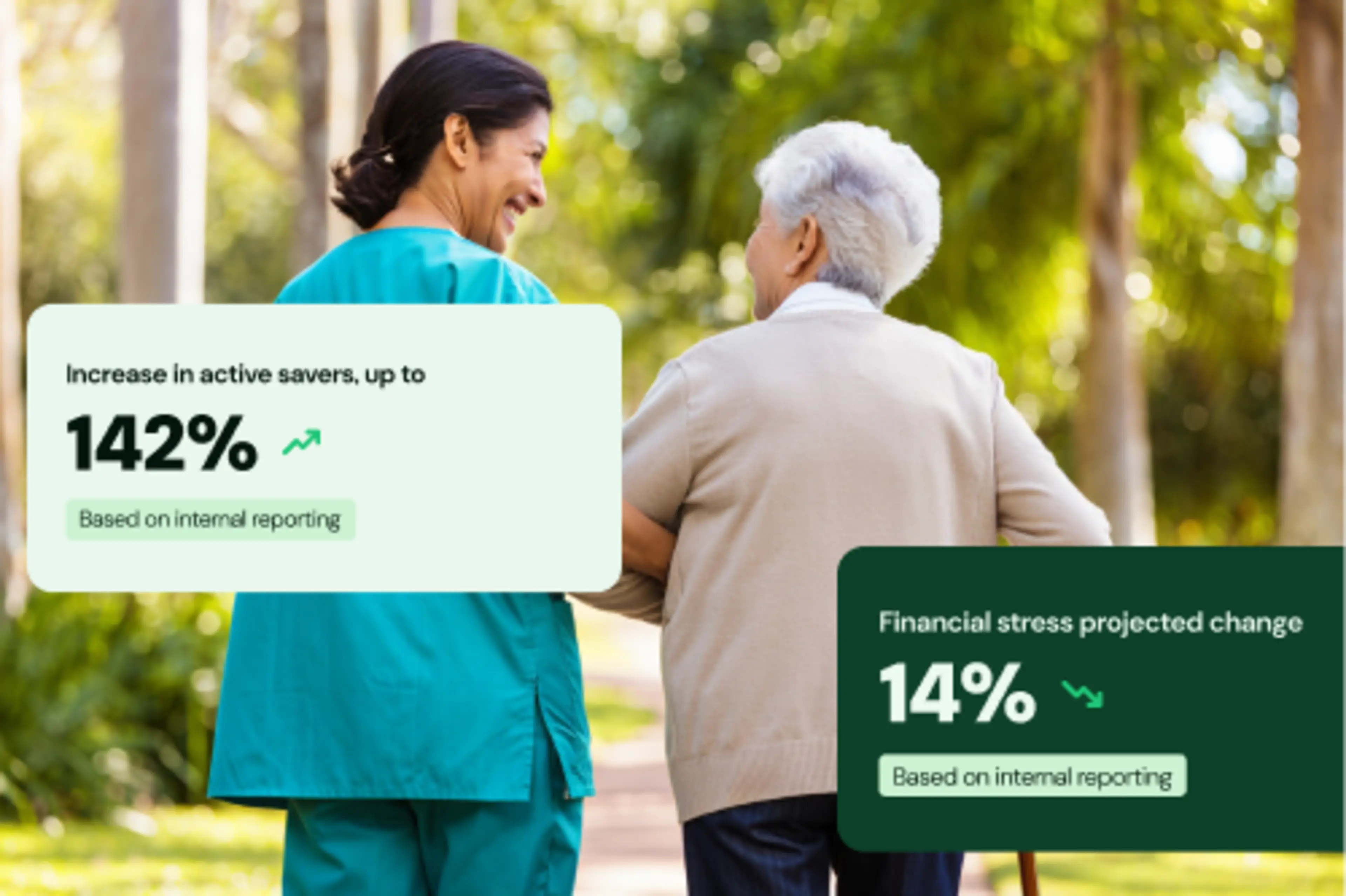
Increase in active savers (142% based on internal reporting)
12.5% change in a financial stress metric2
Reduction in fee-based transactions (28,534 based on internal data)
Based on internal data and early program observations; results may vary.
1 This assumes an average of $61,868 fees avoided
2 Stress Days measures the time between the final purchase in a given pay period and the end of that pay period. It is normalized to a 14-day pay cycle.
Focus on financial wellness
Senior Living Communities was an early adopter of earned wage access, but over time, leadership began to question whether their previous programs were truly delivering value.
While employees had access to their wages, several issues persisted:
Employees were paying recurring fees to access earned income
Payroll teams faced added operational complexity
There was limited visibility into financial outcomes
Employee experience and customer support were inconsistent
Ultimately, Senior Living Communities recognized a critical gap: Access to wages alone did not appear to fully address broader financial wellness goals.
Reasons for a new EWA and financial wellness partner
Rather than settling for incremental improvements, Senior Living Communities raised the bar.
They began evaluating solutions that could deliver:
A model designed to reduce or eliminate certain employee-paid fees
Simpler payroll operations
Stronger employee support
Improved visibility into financial wellness indicators
Chime Workplace offered a broader set of financial wellness tools alongside earned wage functionality.
Payroll transition, made seamlessly
Switching providers is often assumed to be complex, time-consuming, and risky for payroll. For Senior Living Communities, the transition was relatively streamlined.
Because Senior Living Communities already used UKG, payroll implementation required limited internal effort and did not require significant changes to existing payroll operations.
From planning to launch, the transition was completed in just over two weeks of active communication:
September 24, 2025 — Benefit communications begin
October 1 — Employee announcement (newsletter)
October 6 — “Coming soon” rollout emails
October 10 — Program goes live
What didn’t change mattered most:
No payroll deductions or intercepts were introduced based on the selected configuration
Limited additional reconciliation or new processes were required
No material disruption to existing payroll cycles was reported
Payroll continued operating with minimal reported disruption or additional burden on HR, finance, or operations teams.
We expected switching providers to take months. In reality, it was seamless—and our payroll processes continued running normally.
—Heidi Fava, Controller, Senior Living Communities
Key takeaway: Some modern EWA platforms are designed to remove payroll from the process, making switching faster, lower-risk, and operationally simple.
Impact of Chime Workplace EWA and financial wellness platform
1. Reducing employee-paid fees and supporting employee cash flow
With a model designed to reduce or eliminate certain employee-paid fees, Senior Living Communities is projected to help employees avoid nearly $750,000 in annual fees.
That’s more than $61,000 per month returned to Senior Living Communities employees, which may support everyday expenses, savings, and longer-term financial goals.
2. Reducing employee financial stress
After implementing Chime Workplace™, Senior Living Communities observed a 12.5% reduction in financial stress in just a few months.
Senior Living Communities employees are also outperforming their industry benchmarks:
Senior Living Communities: 0.7 days
Healthcare Employer Benchmark: 1.0 days
In practice, this may indicate reduced short-term financial strain between pay cycles—and better positioning to manage everyday expenses without relying on short-term solutions.
Chime Workplace uses an internal metric to estimate financial stress based on tracking how long employees go between spending money and their next paycheck—which may serve as a directional indicator of cash flow timing.
3. Increased employee savings activity
In addition to accessing wages, some employees also increased savings activity.
Savings Accounts Opened
↑ 145% increase (based on internal reporting)Active Savers (month-over-month)
↑ 142% increase (based on internal reporting)
More employees are now consistently saving, which may contribute to improved financial stability over time.
4. Improved payroll process and reduced HR support issues
The switch was associated with several operational changes for Senior Living Communities internally as well:
More streamlined payroll processes
Reduction in certain HR support issues
Integration with UKG
A shift from a transactional benefit to a strategic financial wellness program
With Chime®, we’re able to enhance our overall benefits with meaningful financial tools — giving team members access to their pay now, and greater confidence to achieve future financial goals.
—Nerissa Nelson, VP, Human Resources, Senior Living Communities
A leadership decision aimed at improving program outcomes
Senior Living Communities’ journey reflects a broader shift in how employers evaluate financial benefits. Rather than focusing on access alone, they prioritized outcomes, and were willing to make multiple changes over time to get it right.
"When we saw how much our team members were paying in fees, it became clear we needed a different model," said Heather Stewart, Director of Talent Acquisition at Senior Living Communities. "Moving to a fee-free approach better aligned with our commitment to our team members and our guiding principle, people first always.”
Impact of EWA provider change
Switching EWA providers doesn’t have to be complex. And, the right solution can deliver far more than access to wages.
By moving to Chime Workplace™, Senior Living Communities:
Helped reduce certain employee costs
Streamlined aspects of internal operations
Provided visibility into financial wellness indicators
This reflects one approach to structuring a financial wellness program.
Request a demo
See how Chime Workplace™ can help your organization replace legacy EWA and support employee financial wellness. Book a demo today.